

Why Small Bathrooms Are the Hardest Spaces to Photograph — And How Good Composition Changes Everything
There's a myth in interior design photography that small spaces are "easy" because there's less to capture. Anyone who's actually tried to photograph a compact bathroom knows the opposite is true. Small bathrooms are some of the most technically demanding spaces I shoot — not because they lack design, but because there's nowhere to hide mistakes.
The wrong angle distorts the room. A wide lens pushed too far makes a beautiful marble vanity look like it belongs in a funhouse mirror. Mirrors themselves throw reflections back at you from every direction. And unlike an open-concept living room where you can reposition until something works, a tight bathroom gives you maybe two or three viable spots to plant your tripod. You have to make those count.
Here's how I think about photographing small bathrooms — and why careful, intentional shooting is what separates documentation from design photography.
The Problem With Tight Spaces
When a bathroom is compact, the instinct is to grab the widest lens you own and back yourself into a corner to get everything in frame. It's understandable — you want to show the full space. But ultra-wide lenses in close quarters come with a real cost: they bow out straight lines, exaggerate perspective, and can make a thoughtfully designed space look cramped and distorted rather than precise and polished.
That distortion is a big deal when an interior designer has spent months selecting tile, specifying fixtures, and dialing in proportions. A stretched image doesn't just look off aesthetically — it misrepresents the work.
My approach is to resist the urge to capture everything and instead focus on what tells the story best. Two or three well-composed angles almost always do more for a space than five awkward ones trying to squeeze in every inch.
Perspective and Camera Height
One of the most overlooked variables in small bathroom photography is camera height. In a compact space, even a few inches up or down changes how the room reads entirely.
I almost always shoot from somewhere between chest and eye level — the perspective that feels like a person simply standing in the room. Go too low and the ceiling disappears, the space feels like a set. Go too high and you're looking down on the design, which flattens everything and makes the space feel smaller than it is.
Getting perspective right in a tight bathroom is part of what makes the final image feel natural and livable rather than staged. It's one of those things you feel more than you consciously notice — but when the height is wrong, something is just off.
Shooting With Intention
In a small space, every decision is amplified. Where you place the camera, how you handle available light versus supplemental lighting, whether you shoot tight on a detail or pull back to show context — all of it matters more when you have less room to work with.
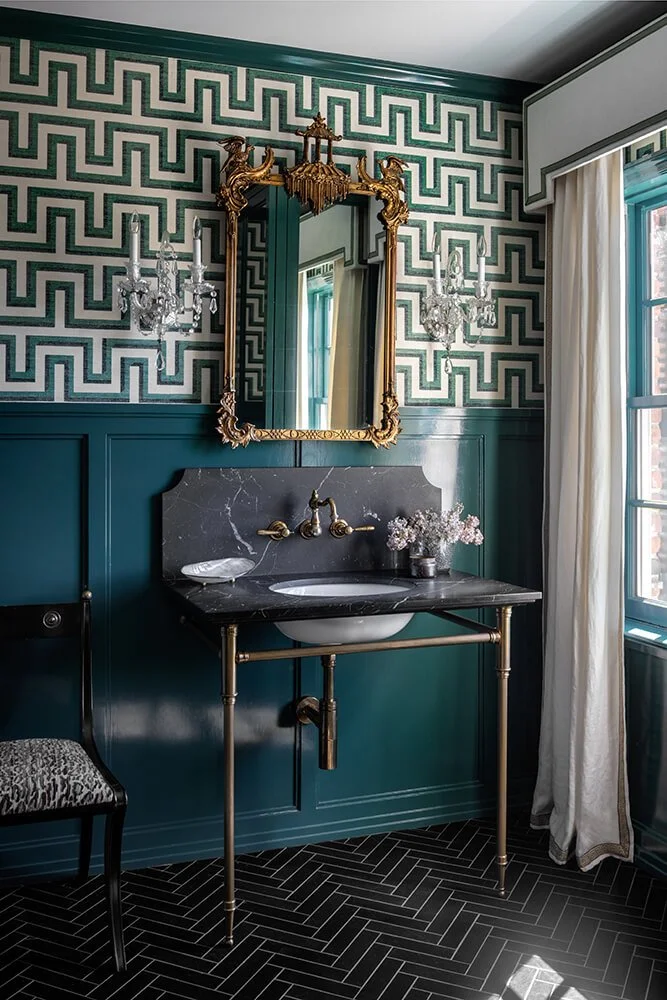
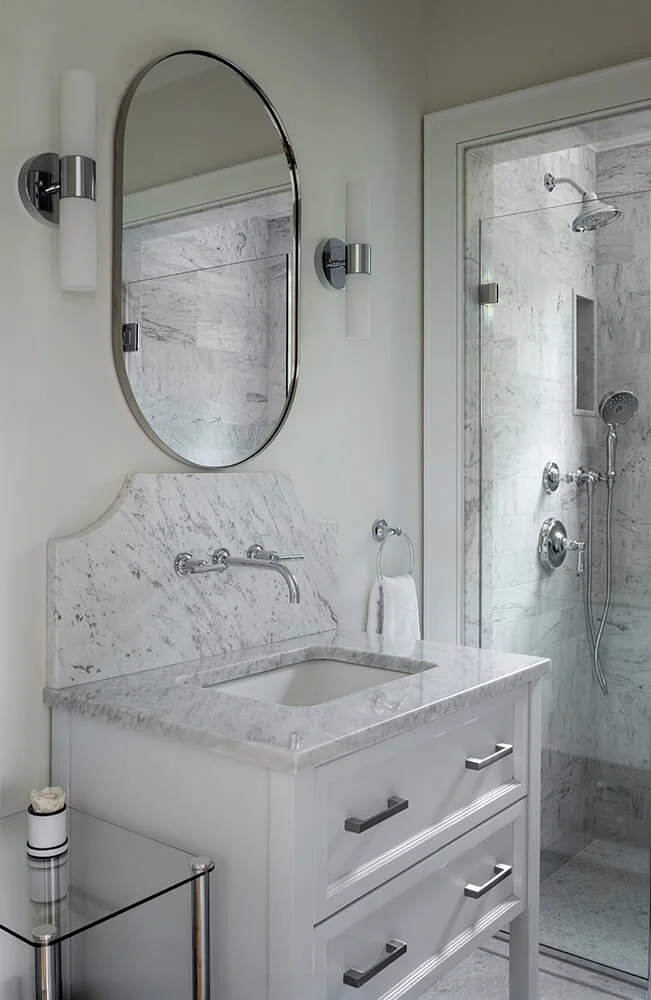
Mirrors are their own challenge. Every bathroom has at least one, and in a compact space they're usually front and center. A mirror that catches a reflection of the camera, a light stand, or a ceiling fixture can take an otherwise clean image and pull focus to exactly the wrong place. Managing that — through angle adjustments, careful light placement, or post-production — is just part of the process.
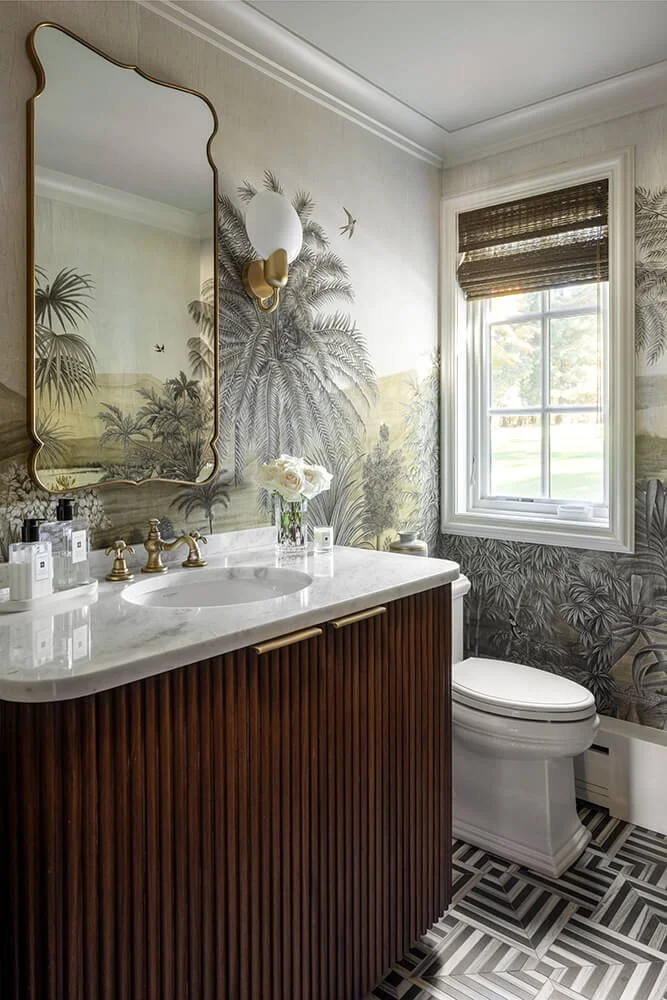
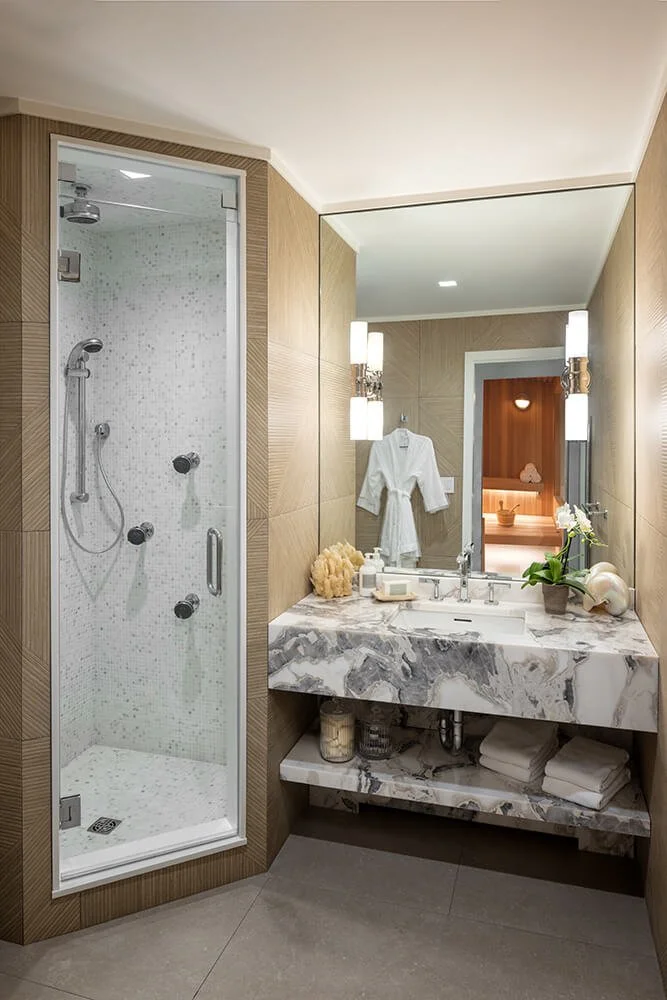
Materials matter too. Marble, stone, and polished chrome all respond differently to light, and what looks incredible in person can fall completely flat if the lighting isn't handled right. Getting those finishes to read correctly in camera is something I think about on every shoot, but especially in bathrooms where the materials are often the whole point.
What Good Bathroom Photography Actually Looks Like
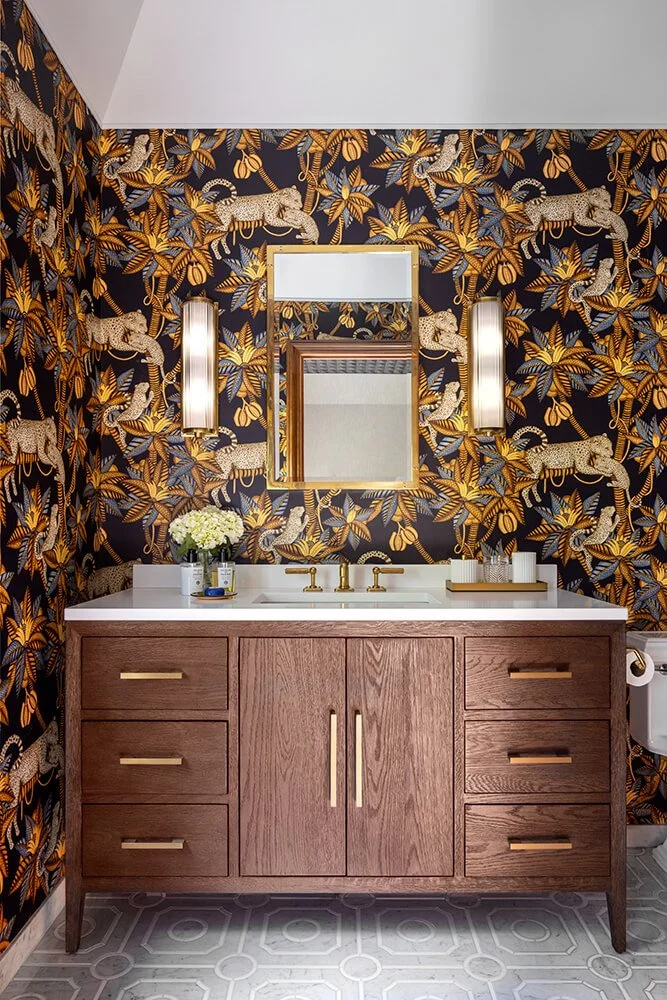
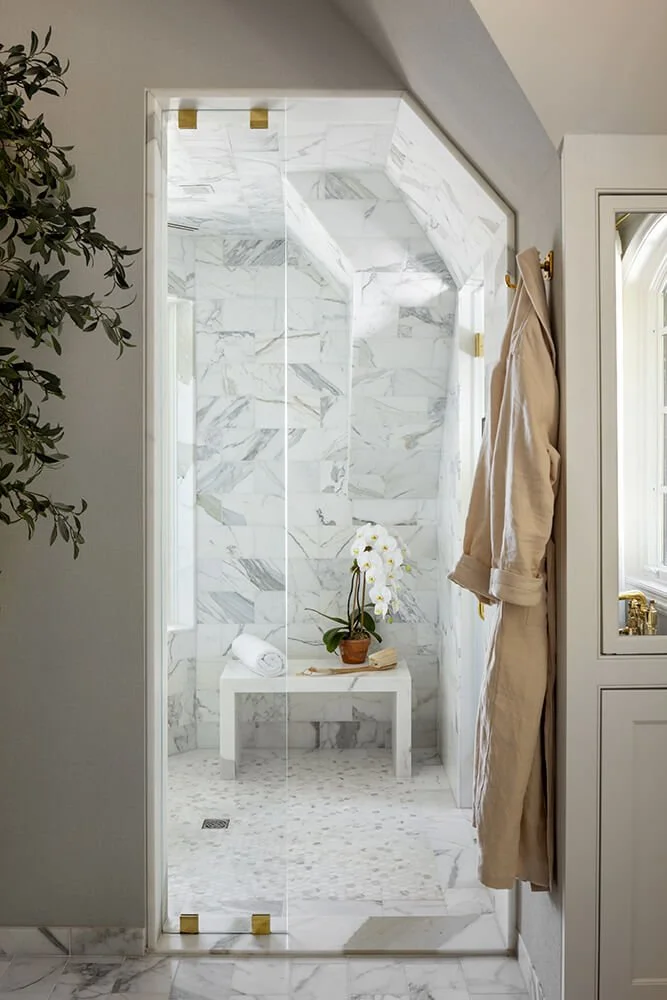
The images below are a handful of examples from recent projects — a range of styles, from serene and monochromatic to bold and pattern-driven. Different as they are from each other, the approach behind each one is the same: find the angles that feel natural, handle the light carefully, and let the design speak.
These are the same techniques I use on every interior shoot, whether it's a powder room or a full home. If you'd like to see them across complete projects, my residential interior photography portfolio is here.
Why the Photography Matters as Much as the Design
Interior designers work incredibly hard to create spaces that feel specific — rooms that reflect a client's personality, a point of view, a level of craft. When those spaces get photographed well, it's a genuine asset: for portfolio work, editorial submissions, social media, and new client conversations. When they get photographed poorly — stretched, poorly lit, awkwardly composed — the work gets misrepresented.
Small bathrooms are particularly vulnerable to this. They're tight, detail-oriented, and often built around materials and finishes that require proper lighting to read correctly. A marble surface shot under the wrong light can look flat and dull. The same marble, handled right, shows all its movement and depth.
Working with a photographer who understands design — not just cameras — makes a real difference in a compact space. The goal is never just to document the room. It's to show it the way the designer imagined it.
Ready to Shoot Your Next Project?
If you're a designer or architect working in the New York metro area and you want your work photographed the way it deserves to be seen, I'd love to connect. Whether it's a compact powder room packed with personality or a full residential renovation, the approach is always the same: intentional, detail-driven, and built around your vision.
Contact me to start the conversation.